
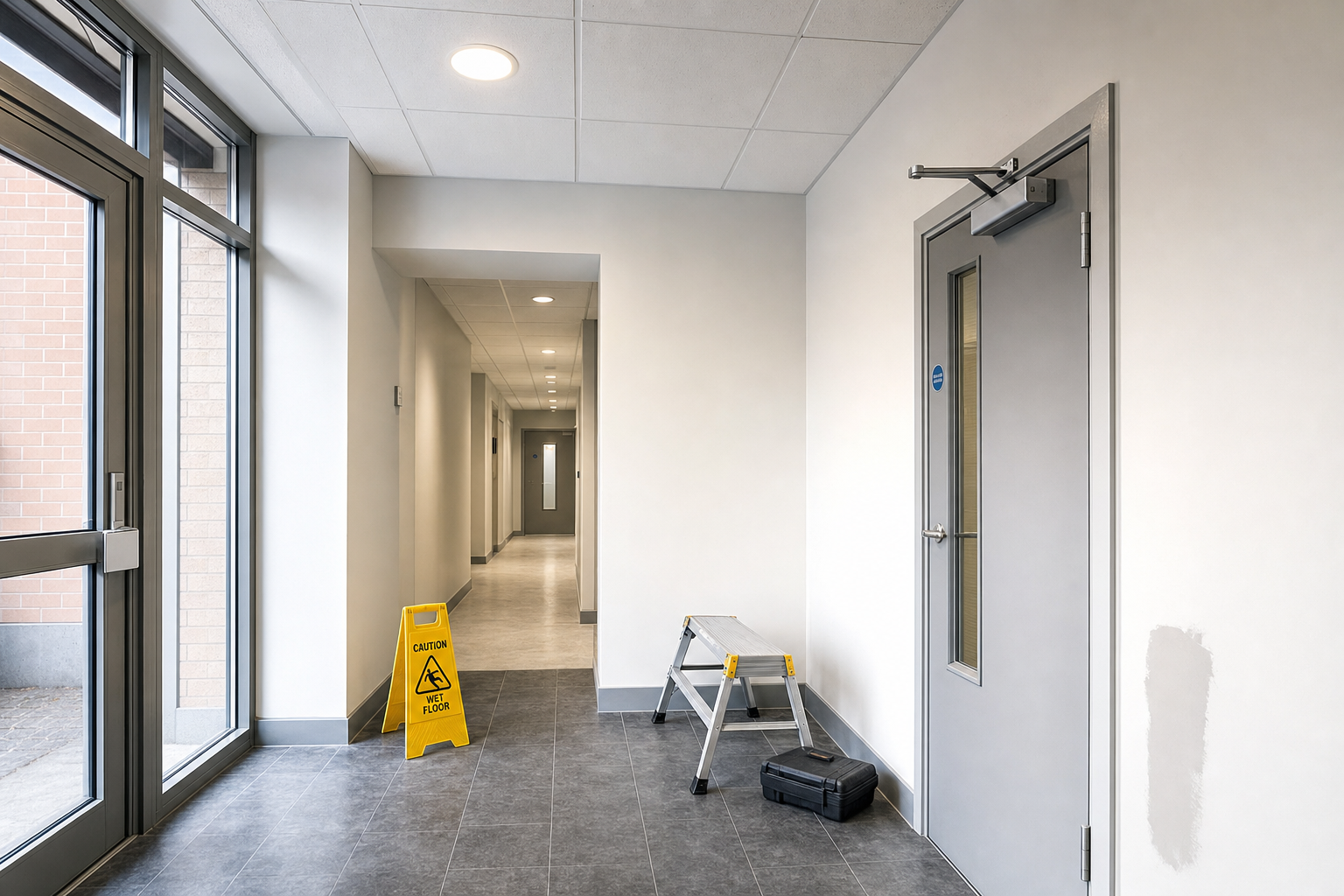
Why planned upkeep keeps buildings steadier
Minor faults do not drift
Everyday defects can be reviewed before they become bigger repair problems or daily irritants.
Grouped tasks save disruption
Related jobs can be arranged together where access and site use make that the better option.
Useful for flexible buildings
This suits commercial sites and managed properties with varied small upkeep needs.
Stay ahead of everyday repairs
General maintenance is often about the issues that do not look dramatic at first but slowly make a building harder to use if they keep being put aside. With Cleantide, building upkeep can cover worn fittings, minor defects, internal building elements and the recurring faults that start becoming part of daily life if nobody deals with them. Reporting and reviewing these jobs in a planned way helps you stay ahead of avoidable disruption. It is a practical route for premises where steady upkeep matters more than waiting for problems to turn into larger repair needs.


Arrange related jobs in a sensible order
Non-urgent issues are often easier to manage when they are grouped by area, priority and how much they affect the people using the property. Choosing Cleantide means your East Grinstead building can have varied upkeep jobs assessed together, with access arranged in a way that makes the work more efficient. We can help keep track of what has been reported, what needs doing next and which tasks can be completed in the same visit. That keeps the building moving without treating every ordinary defect like an emergency.
Frequently asked questions
What is included in general property maintenance?
It can include everyday upkeep, worn fixtures, minor defects and other non-urgent building issues that affect normal use of the property. The exact work depends on what has been reported and whether the task is better dealt with on its own or grouped with related upkeep jobs.
Can several maintenance jobs be grouped together?
Yes. Grouping tasks by location, priority and access can make the work easier to manage and less disruptive. It also helps avoid repeated visits for closely related issues when they can be sensibly reviewed and completed within the same broader piece of upkeep.
Why deal with small defects early?
Small problems have a habit of becoming everyday frustrations or wider repair needs if they are left untouched. Acting earlier can help reduce disruption, stop wear from spreading and keep the building more workable for the people who rely on it each day.