
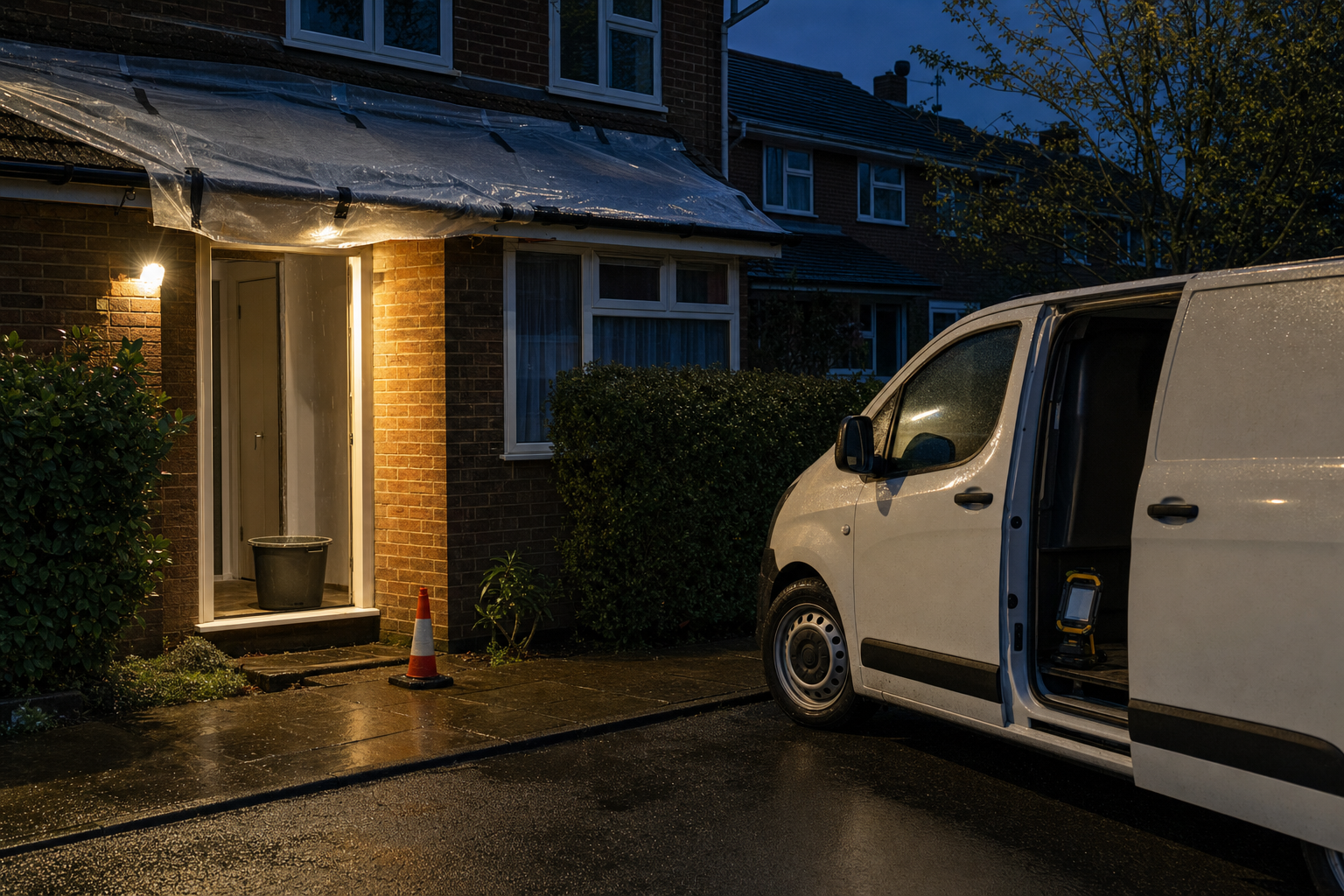
What matters most in an emergency
Fast initial triage
We focus first on what is happening now, where it is and how much risk it creates.
Make-safe action first
Immediate work is aimed at limiting damage and making the affected area safer to manage.
Clear next-step guidance
If more work is needed later, we explain that separately from the urgent response.
Responding to urgent site issues
Some faults need dealing with straight away because the risk is still live. With Cleantide, emergency call-outs begin with quick triage so we understand what has happened, whether the problem is still active and what danger it creates for the property or the people in it. If there is a leak, a failed essential fixture, an electrical fault or sudden building damage, the first priority is to make the area safer and limit further harm. When you call, it helps to have the address, access details, visible symptoms and any steps already taken ready to share.
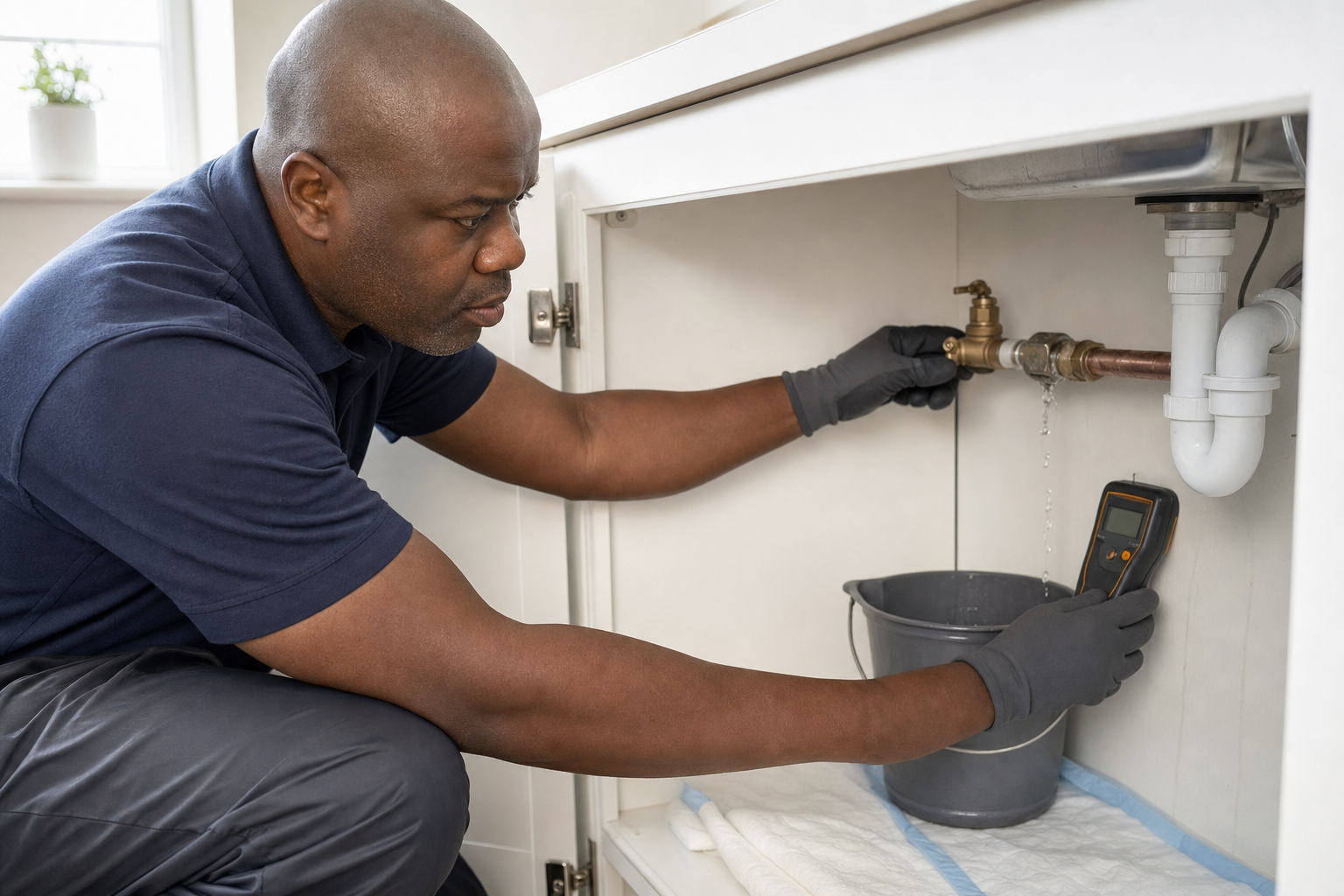

Stabilise first, then plan repairs
Urgent property work does not always mean every part of the final repair is completed on the first visit. Choosing Cleantide means your East Grinstead emergency is treated as an immediate problem first, with attention on controlling the situation and reducing damage. Once the risk is under control, we can explain what follow-on remedial work may still be needed. That gives you a clearer idea of what to expect during the call-out and what may need arranging after the property has been stabilised.
Frequently asked questions
What counts as an emergency property repair?
Active leaks, electrical faults, failed essential fixtures and sudden building defects can all become emergencies when they create an immediate risk of damage, loss of use or safety concerns. The key point is whether the issue is live and cannot sensibly wait for routine scheduling.
What information should we give when calling?
Please tell us the exact address, a contact name, access instructions, what symptoms you can see and whether you have already taken any steps to control the problem. If there is an active hazard or restriction on entry, sharing that clearly at the start helps us respond better.
Will the full repair always be done on the first visit?
Not always. The first aim is to make the situation safer and limit further damage. Once the urgent risk is under control, we can explain whether follow-on remedial work is needed and what the next stage is likely to involve for the affected part of the property.